

Turn on voice calls
Gumball, your personal agent, can always be called. Custom agents have to opt in, which the agent’s editors do from the Settings tab, under Voice.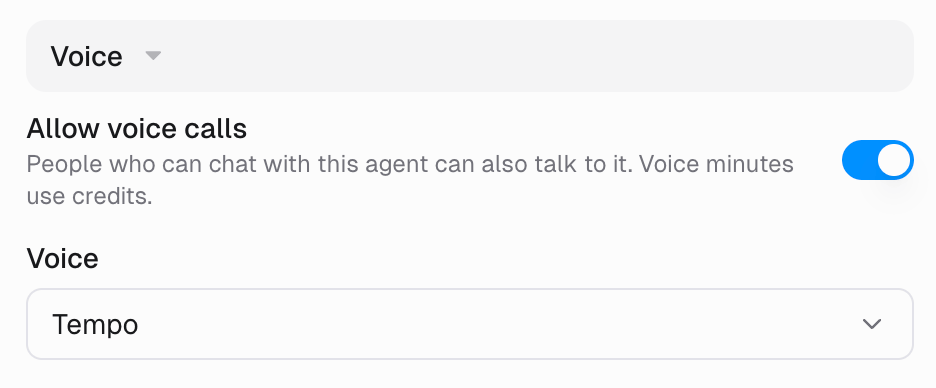
Voice minutes use credits. See Voice call costs for the rate and how it appears in a chat’s breakdown.
Start a call
Open a chat with the agent and select the voice button at the right of the message bar, next to the microphone.
While you are on a call
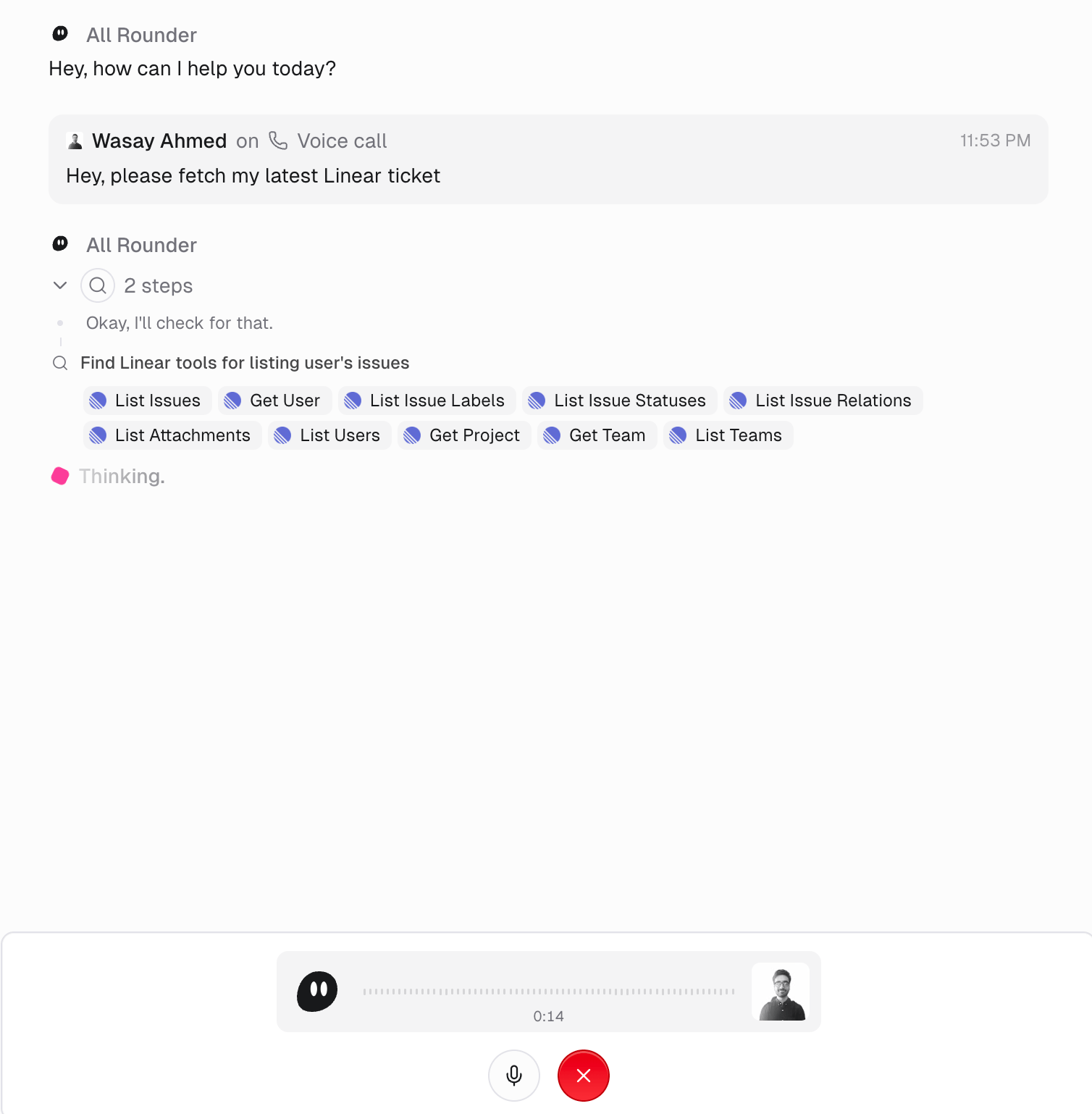
- Your words appear in the chat. Each thing you say is added as a message tagged Voice call, and the agent’s spoken replies are added as its messages.
- Small talk is answered on the call; real requests are handed to the agent, which then runs in the chat exactly as if you had typed them — thinking, tool calls, and steps all visible.
- The agent tells you what it can do. It knows its connected apps, skills, and knowledge, so you can ask “can you check Linear?” and get a truthful answer.
- The call bar at the bottom shows how long you have been talking, with a microphone control and a red button to hang up.
Good to know
- One call per task. A chat can hold one live call at a time. If several calls are already running on your account, the next one is refused until you end one.
- Model access applies. If your organization restricts which models you can use, the voice model may be blocked for you. The call says so, and you can request access from an admin.
- Credits run the call. You need credits for the minute ahead, so a call ends if your balance runs out mid-conversation.
- Calls happen in the browser. You start a call from the agent’s chat in Gumloop.
FAQ
Do I need to give people extra permission to call an agent?
Do I need to give people extra permission to call an agent?
No. Voice follows chat access: if someone can chat with the agent, they can call it once Allow voice calls is on.
Can I still see what was said after the call?
Can I still see what was said after the call?
Yes. The call is transcribed into the chat as it happens, so the task holds both sides of the conversation along with everything the agent did.
How is a call billed?
How is a call billed?
By time, not by tokens, and it shows up as Voice in the chat’s credit breakdown. Work the agent does during the call — tool calls, thinking, compute — is billed the usual way on top. See Voice call costs.